

Meditation Now: A Shifting Practice
Meditation, once confined to monasteries and spiritual retreats, has exploded in popularity. What was once a practice reserved for a select few is now a mainstream wellness activity, fueled by a growing awareness of its benefits for mental and physical health. This shift hasn't just been about more people meditating; it's about how people are meditating.
Historically, meditation took many forms – from the focused breathwork of Vipassana to the mantra repetition of Transcendental Meditation. These traditions often involved years of dedicated practice under the guidance of a teacher. But the 21st century has brought a new wave of accessibility: meditation apps and, increasingly, AI-powered tools.
This raises a central question: how do these technologically-driven methods stack up against traditional approaches? AI promises convenience and hyper-personalization, tailoring meditations to your specific needs and even responding to your biometric data. That sounds appealing, and it’s certainly driven a lot of investment in this space. However, it's worth considering what might be lost in translation when we outsource our inner work to algorithms.
We'll explore the core principles of traditional meditation, unpack the technology powering AI meditation apps, compare leading platforms, and ultimately assess the long-term impact of each approach. The goal isn’t to declare a winner, but to provide a comprehensive guide for anyone seeking a zenful state in 2026 and beyond.
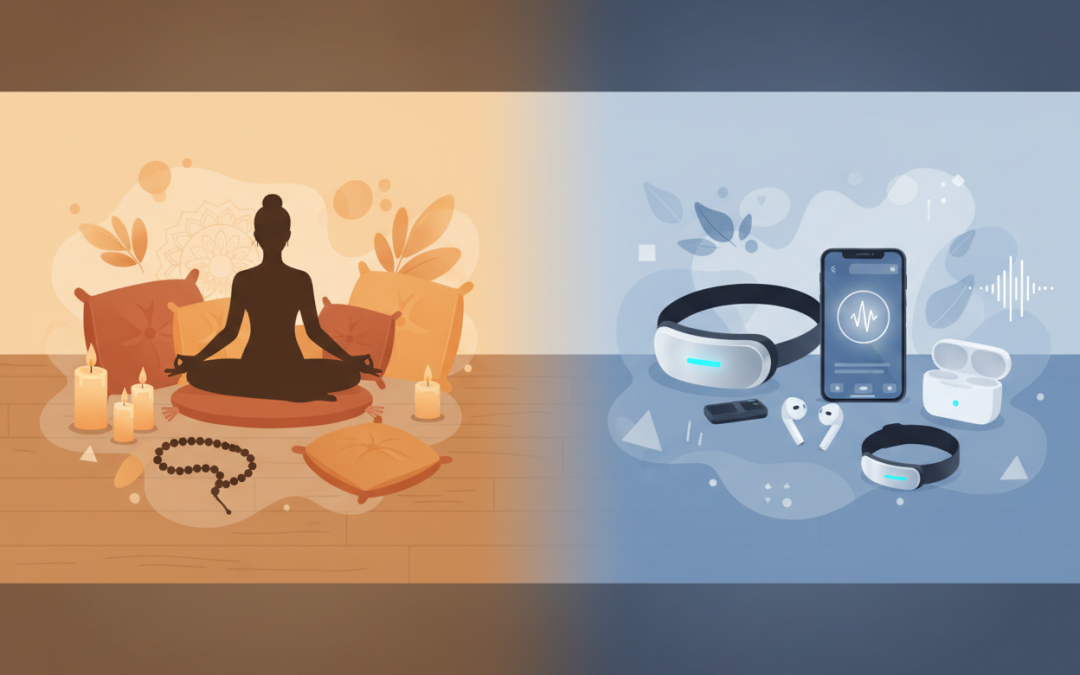
Traditional Meditation: Core Principles
When we talk about 'traditional' meditation, we're generally referring to practices rooted in ancient spiritual traditions like Buddhism, Hinduism, and Taoism. These include Vipassana (insight meditation), Zen meditation (Zazen), Transcendental Meditation (TM), and various forms of mindfulness practice. While techniques differ, they share fundamental principles.
At the heart of most traditional meditation is the cultivation of present moment awareness. This often involves focused attention – directing your awareness to a specific object, like your breath, a mantra, or a bodily sensation. Open monitoring is another key element, where you observe thoughts and feelings without judgment, allowing them to arise and pass away without getting carried away by them. The goal isn't to stop thinking, but to change your relationship to your thoughts.
Consistent practice is absolutely essential. Traditional teachers emphasize the importance of establishing a regular routine, even if it’s just for a few minutes each day. The role of a qualified teacher or a supportive community is also significant. A teacher can provide guidance, feedback, and encouragement, helping you navigate challenges and deepen your practice. They offer more than just instruction; they embody the principles of the practice.
Research supports many of the benefits traditionally associated with meditation. Studies have shown that regular meditation can reduce stress, improve focus and attention, regulate emotions, and even alter brain structure. A 2018 meta-analysis published in JAMA Internal Medicine found that mindfulness meditation programs showed moderate evidence of improving anxiety, depression, and pain. However, these benefits typically require sustained effort and commitment.
AI Meditation Apps: What’s Under the Hood?
AI meditation apps aren’t powered by sentient beings offering spiritual guidance. Instead, they leverage algorithms and data to personalize the meditation experience. The core idea is to use technology to make meditation more accessible, engaging, and effective. But how does this actually work?
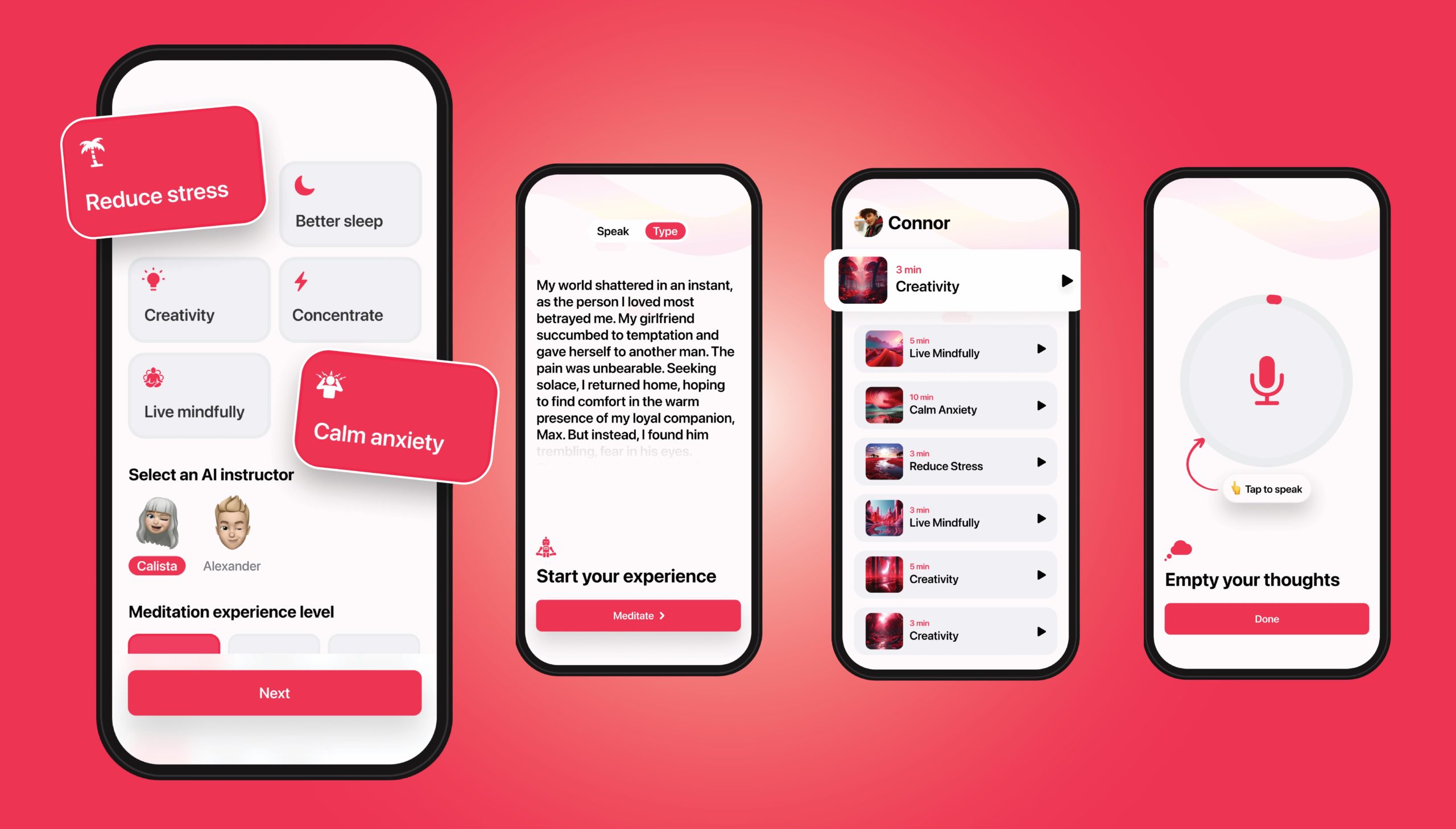
Personalized recommendations are a key feature. Apps track your meditation history, preferences, and even potentially biometric data (through wearable devices) to suggest meditations tailored to your needs. Some apps integrate with heart rate variability (HRV) sensors, adjusting the pace and content of the meditation based on your physiological state. Adaptive difficulty levels aim to challenge you appropriately, preventing boredom or overwhelm.
AI-generated soundscapes are another common element. These apps can create ambient music or natural sounds designed to promote relaxation and focus. More advanced apps, like those utilizing large language models (LLMs) such as Google’s Gemini 2.5 Flash – as demonstrated in a YouTube video by Full Lotus Zen Meditation – are now capable of generating entirely customized guided meditations based on user prompts.
It’s important to be realistic about what AI can and can’t do. It can adapt to your data and offer personalized content, but it can’t replace the nuanced understanding and empathetic connection of a human teacher. The AI doesn’t understand your suffering; it simply responds to patterns in your data. I’m not sure about the extent to which these apps are truly adapting in real-time – that capability seems limited at this stage, and claims should be viewed cautiously.
App Roundup: Leading AI Meditation Platforms (2026)
The AI meditation app market is crowded, but a few key players stand out. Here's a look at some leading platforms as of 2026, focusing on their unique features and approaches.
Headspace remains a popular choice, known for its beautifully designed interface and wide range of guided meditations. In 2026, Headspace has expanded its AI capabilities, offering personalized meditation series based on your mood and goals. A subscription costs $12.99 per month or $69.99 per year.
Calm is another heavyweight, emphasizing sleep stories and relaxing soundscapes in addition to guided meditations. Calm's AI features focus on generating personalized daily check-ins and suggesting meditations based on your sleep data. Subscription pricing is similar to Headspace: $14.99 monthly or $69.99 annually.
Insight Timer distinguishes itself with a vast library of free meditations, alongside premium content and AI-powered features. The AI functionality, launched in late 2025, includes personalized meditation recommendations and a 'Meditation Coach' that adapts to your progress. Insight Timer offers a freemium model, with a paid subscription unlocking additional features for $9.99 per month.
Jenova AI Meditation Guide is a newer contender that fully leans into the AI potential. It offers personalized practice programs, scripts, and guidance across various meditation traditions. Jenova's pricing is tiered, starting at $19.99 per month for basic access, and scaling up for more advanced features. Wondercraft provides tools for creating AI-generated audio meditations, catering to content creators and those who want full control over their practice – with a focus on conversational AI.
Ultimately, the 'best' app depends on your individual needs and preferences. Headspace and Calm offer polished, mainstream experiences, while Insight Timer provides a more diverse and community-driven approach. Jenova and Wondercraft are for users who want to fully harness the power of AI in their meditation practice.
Enhance Your Meditation Practice: Essential Tools for Mindful Living

Immersive Spatial Audio · World-class noise cancellation · Up to 30 hours of playtime
These headphones create an immersive sound environment, ideal for blocking out distractions during meditation sessions, whether AI-guided or traditional.

Natural Himalayan salt crystal chunks · Adjustable dimmer cord · Authentic wood base
This salt lamp provides a calming, warm ambiance, contributing to a peaceful atmosphere conducive to mindfulness and relaxation.

Ultrasonic aromatherapy diffuser · Includes 10 therapeutic grade essential oils · 7 ambient light settings and 4 timer options
This set allows for the creation of a personalized sensory experience with calming scents and adjustable lighting to enhance meditation.

Eight-week plan for finding peace · Practical mindfulness techniques · Accessible for beginners
This book offers a structured approach to mindfulness, providing foundational knowledge and techniques that benefit both AI-guided and traditional meditation practitioners.

Supportive buckwheat hull filling · Ergonomic design for comfort · Removable, OEKO-TEX certified cover
This cushion provides essential support for comfortable and stable meditation posture, allowing for longer, more focused practice sessions.
As an Amazon Associate I earn from qualifying purchases. Prices may vary.
Personalization: AI vs. Human Guidance
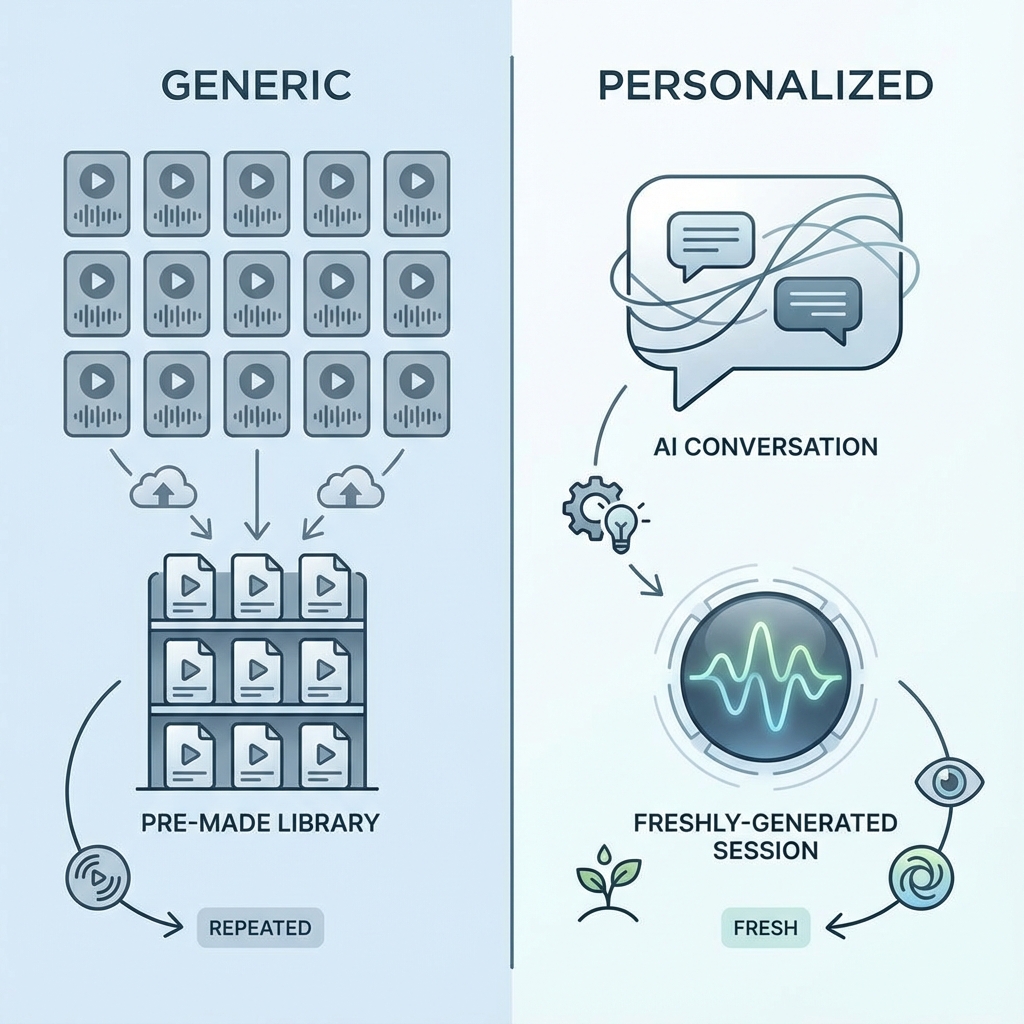
Personalization is a major selling point for AI meditation apps. These apps gather data on your meditation habits, preferences, and potentially biometric information to tailor the experience to your needs. This data-driven approach can be effective at identifying patterns and suggesting relevant content.
However, traditional teachers offer a different kind of personalization. They don’t rely on algorithms; they rely on direct observation, active listening, and years of experience. A good teacher can sense your emotional state, understand the context of your life, and offer guidance that is truly responsive to your individual needs. This level of understanding is difficult, if not impossible, for an AI to replicate.
There’s a risk that AI personalization could reinforce existing biases or create filter bubbles. If the algorithm only recommends meditations that align with your current preferences, you might miss out on opportunities for growth and exploration. Can an AI truly understand the nuances of your emotional state, or might it simply offer superficial solutions?
Ethical considerations surrounding data collection and privacy are also important. AI meditation apps collect a significant amount of personal information, and it’s crucial to understand how that data is being used and protected. Transparency and user control are essential to building trust.
Cost and Accessibility: Breaking Down Barriers
Cost and accessibility are key factors for many people considering meditation. AI meditation apps generally operate on a subscription model, with monthly or annual fees ranging from around $10 to $20. While this can add up over time, it’s often less expensive than traditional meditation classes or private instruction.
Traditional meditation classes and retreats can be significantly more expensive, ranging from $50 for a single class to several hundred or even thousands of dollars for a multi-day retreat. Private instruction is typically the most expensive option, with rates varying depending on the teacher’s experience and qualifications.
AI apps excel in accessibility. They’re available anytime, anywhere, as long as you have a smartphone and an internet connection. This makes them a convenient option for busy people who might not have the time or resources to attend in-person classes. However, the digital divide remains a barrier for some, as access to technology is not universal.
Fortunately, free resources exist for both approaches. Many apps offer a selection of free meditations, and there are countless free guided meditations available online. Similarly, many communities offer free or low-cost meditation groups and events.
Long-Term Impact: Habit Formation & Depth
The long-term impact of AI-guided meditation versus traditional practice is still being studied. AI apps often employ gamification techniques – streaks, badges, and progress trackers – to encourage consistent practice. This can be effective at building a habit, particularly for beginners.
However, there’s a concern that relying too heavily on external rewards could undermine intrinsic motivation. If you’re only meditating to maintain a streak or earn a badge, you might lose interest once the novelty wears off. The discipline inherent in traditional practice, on the other hand, can foster a deeper commitment to the practice itself.
I’m wondering if AI-guided meditation might be a particularly effective starting point for many people. It can provide a gentle introduction to the practice and help build a basic habit. But eventually, many practitioners may benefit from transitioning to a more self-directed approach, or seeking guidance from a qualified teacher. This isn’t to say A
There's a risk that AI could become a crutch, preventing users from developing their own internal resources. The goal of meditation isn’t simply to relax or reduce stress; it’s to cultivate wisdom, compassion, and a deeper understanding of yourself. Whether AI can truly support that process remains an open question.


No comments yet. Be the first to share your thoughts!