

Zen and the Algorithm: A Current View
I remember when I first tried to meditate. It felt…impossible. My mind raced, my body ached, and I couldn’t quiet the constant internal chatter. It took months of practice, and the guidance of a local teacher, to begin to experience any real sense of calm. Now, in 2026, the path to that calm looks very different for many people. AI-guided meditation apps have exploded in popularity, initially met with skepticism from long-time practitioners, but now increasingly mainstream.
The promise is compelling: personalized meditation experiences tailored to your individual needs and progress. Algorithms analyze your responses, adjust the pace, and curate content specifically for you. It’s a far cry from the one-size-fits-all approach of some traditional methods. But does it work? And what’s lost – or gained – in the transition from human guidance to artificial intelligence?
This article isn’t about declaring one approach "better’ than the other. Instead, we"ll provide a comprehensive comparison of AI-guided meditation apps and traditional practice as of 2026. We'll look at the technology, the benefits, the drawbacks, and ultimately, help you decide which path is right for you. The meditation technology available now is quite different than even five years ago.
Traditional Meditation: Core Principles
Traditional meditation isn't a single technique; it’s a vast spectrum of practices developed over centuries. While variations exist, they share common threads. At its heart, nearly all forms emphasize cultivating present moment awareness. This is often achieved through focused attention, most commonly on the breath, but also through body scan meditations or observing thoughts and sensations without judgment.
Different schools offer distinct approaches. Vipassana, originating in Theravada Buddhism, focuses on insight into the nature of reality through mindful observation. Samatha-Vipassana combines calming the mind (Samatha) with insight practice (Vipassana). Transcendental Meditation (TM), popularized by Maharishi Mahesh Yogi, uses mantras to quiet the mind. Zen meditation, rooted in Zen Buddhism, often involves zazen – seated meditation with a focus on posture and breath.
Equanimity – the ability to remain balanced and undisturbed by life’s ups and downs – is a central goal. It's not about suppressing emotions, but about observing them without getting carried away. The role of a teacher or sangha (community) is often crucial in traditional learning. A teacher can provide personalized guidance, correct misconceptions, and offer support along the way. The sangha provides a sense of belonging and shared practice.
It's important to understand that traditional meditation is about consistent practice, not achieving a specific state. The goal isn't to "stop thinking," but to become aware of your thoughts and learn to relate to them differently. This takes time, patience, and a willingness to embrace the challenges that arise. A good teacher can help you navigate these challenges.
AI Apps: How They Work in 2026
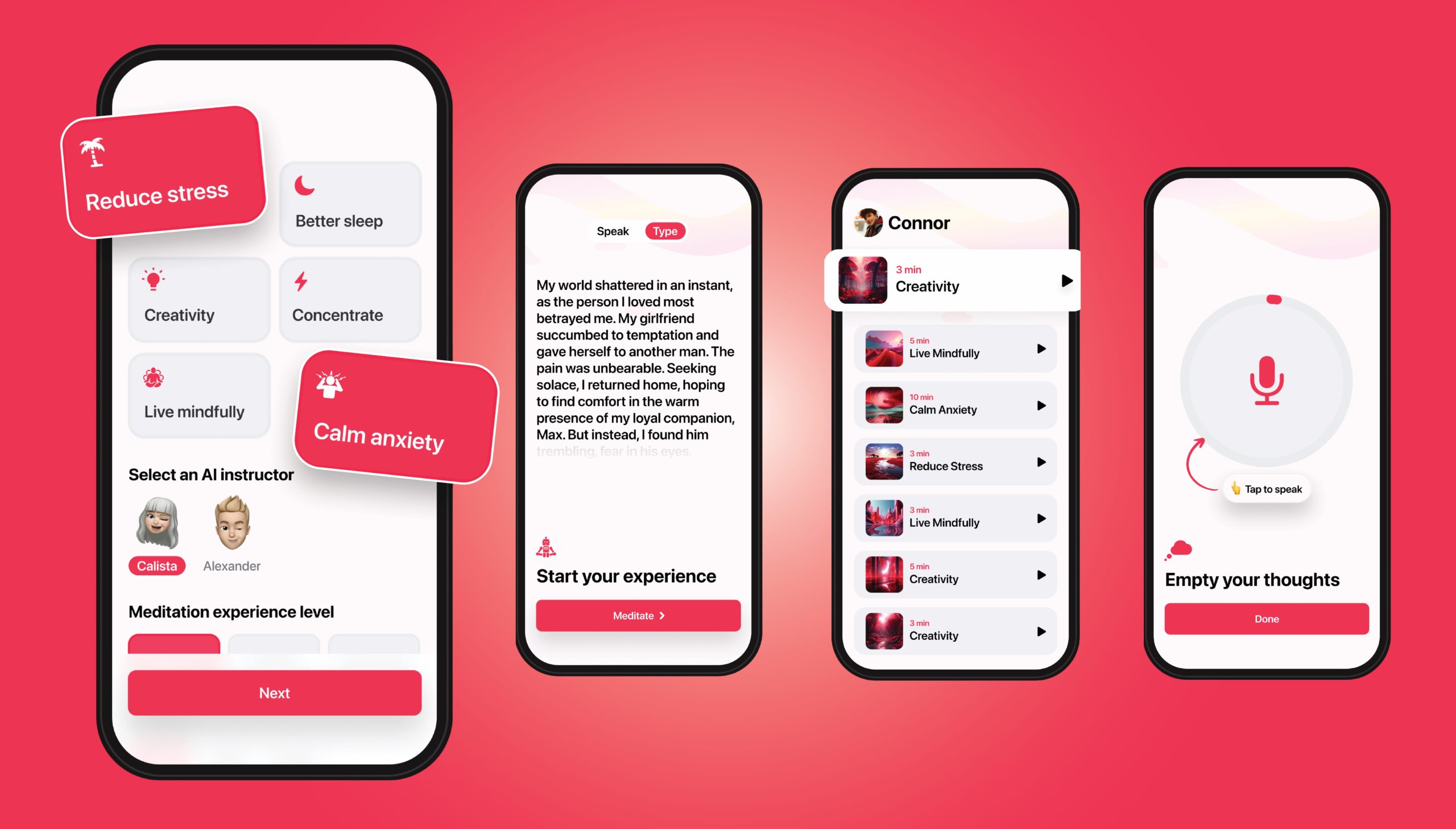
AI-guided meditation apps in 2026 are far more sophisticated than their earlier counterparts. They leverage algorithms, machine learning, and natural language processing to provide personalized experiences. These apps collect data on your meditation sessions – things like your focus levels, emotional state (often inferred from voice analysis), and even physiological data if you’re using connected devices.
This data is then used to adjust the meditation content. For example, if the app detects that you’re feeling anxious, it might suggest a calming meditation focused on breathwork. If you’re a beginner, it will likely start with shorter, simpler meditations and gradually increase the duration and complexity as you progress. Voice synthesis has improved dramatically, with AI voices sounding increasingly natural and less robotic.
A significant development is the integration of biofeedback. Many apps now support heart rate variability (HRV) sensors and, increasingly, EEG headsets. HRV data can provide insights into your stress levels and nervous system regulation. EEG headsets attempt to measure brainwave activity, offering a more direct assessment of your mental state. The apps then use this data to tailor the meditation experience in real-time.
However, it's important to be realistic. The algorithms aren’t perfect. They can misinterpret data, and personalization isn’t always as effective as it seems. While AI can adapt to your responses, it lacks the nuanced understanding and empathy of a human teacher. It’s a tool, and like any tool, it has limitations.
App Roundup: Leading Platforms Compared
The market for AI-guided meditation apps is crowded, but a few key players stand out in 2026. Headspace remains a popular choice, known for its beautifully designed interface and wide range of themed meditations. They offer a vast library of content, ensuring you’ll likely find something tailored to your needs and experience level. A subscription currently costs $12.99 per month or $69.99 per year.
Calm has also evolved, adding more AI-powered personalization features. They focus heavily on sleep stories and soundscapes, but their meditation library is also extensive. Calm’s pricing is similar to Headspace, at $14.99 per month or $69.99 annually. Insight Timer, initially a free platform, now incorporates AI-driven recommendations and personalized meditation plans with a premium subscription at $9.99 a month.
Balance is a more niche app, specializing in meditations for anxiety and stress relief. It uses a unique approach that focuses on building resilience through challenging meditations. Balance’s subscription is $19.99 per month. Newer entrants like Serenity Now (subscription $9.99/month) are gaining traction by focusing on integrating meditation with other wellness practices like yoga and mindfulness exercises.
Beyond these, Zenderful (available on the Google Play Store) is a newer app gaining recognition, offering a variety of guided meditations and sounds. While it doesn’t have the brand recognition of Headspace or Calm, it’s a solid option, particularly for users looking for a more affordable alternative. It has a free tier with limited features, and a premium subscription for $7.99 per month.
Enhance Your Meditation Practice: Essential Gear for Mindful Living

Supportive buckwheat hull filling for meditation, yoga, and relaxation · Removable, OEKO-TEX STANDARD 100 certified cover for easy cleaning · Designed for comfort and stability during seated practices
This bolster pillow provides essential support and comfort, creating an ideal foundation for focused meditation sessions.

Adaptive Active Noise Cancelling reduces ambient sound by up to 98% · 50-hour playtime with fast charging capabilities · LDAC Hi-Res Wireless Audio for superior sound quality
These headphones create an immersive, distraction-free environment, crucial for deep concentration during meditation, whether guided or self-directed.

500ml capacity for extended diffusion · 4 timer settings and waterless auto shut-off for safety · 7 LED color changing lamp for ambiance
The essential oil diffuser enhances the meditative atmosphere with calming scents and gentle lighting, promoting relaxation and tranquility.

15lbs weight for calming pressure · Cooling glass beads for all-season use · OEKO-TEX STANDARD 100 certified fabric
This weighted blanket offers a comforting, grounding sensation that can help reduce anxiety and promote a sense of calm, aiding in deeper relaxation.

Introduces fundamental mindfulness techniques · Explains the benefits and practice of meditation · Accessible guide for beginners
This book serves as an excellent resource for understanding the core principles of meditation, enriching both traditional and AI-assisted practices.
As an Amazon Associate I earn from qualifying purchases. Prices may vary.
Personalization: AI's Biggest Strength?
The core appeal of AI-guided meditation apps is, undoubtedly, personalization. These apps can adapt to your progress, mood, and preferences in ways that a traditional meditation class simply can’t. They track your consistency, identify patterns in your emotional state, and adjust the content accordingly. This can be particularly helpful for beginners who are still learning the ropes.
However, there are potential downsides to algorithmic personalization. Filter bubbles are a real concern. If the app only shows you meditations that align with your existing preferences, you might miss out on valuable experiences that challenge you or expose you to new perspectives. Algorithmic bias is another issue. The algorithms are trained on data, and if that data reflects existing biases, the app might perpetuate them.
There’s also the risk of becoming overly reliant on the app. If you always need an AI to guide you, you might struggle to meditate on your own. This contrasts with the personalized guidance of a human teacher, who can offer tailored advice and support based on a deeper understanding of your individual needs and challenges. A good teacher can help you develop the skills to meditate independently.
Cost and Accessibility: A Practical Look
The cost of traditional meditation can vary widely. A single drop-in meditation class might cost $15-$25. A multi-week course could run $100-$300 or more. Retreats can be significantly more expensive, often costing several hundred or even thousands of dollars. Teacher fees for private instruction also add to the cost. AI-guided meditation apps, on the other hand, typically operate on a subscription model, with monthly or annual fees ranging from $8 to $20.
Accessibility is a major advantage of apps. They're available anytime, anywhere, as long as you have a smartphone and an internet connection. This makes meditation accessible to people who might not have the time or resources to attend classes or retreats. However, the digital divide remains a barrier for some. Not everyone has access to reliable internet or a smartphone.
The cost of biofeedback devices – HRV monitors and EEG headsets – can add another layer of expense. These devices range in price from $100 to $500 or more. While they can provide valuable data, it’s not clear whether the benefits justify the cost for most users. It’s important to consider your individual needs and budget before investing in these devices.
AI-Guided Meditation Apps vs. Traditional Meditation: A Comparative Overview (2026)
| Criteria | Traditional Meditation | AI-Guided Meditation Apps |
|---|---|---|
| Cost | Generally Low (potential costs for classes/retreats) | Variable - Free options available, but premium features often require subscription |
| Accessibility | Requires finding a teacher or dedicated time/space | Highly Accessible - Available anytime, anywhere with a smartphone/device |
| Personalization | Dependent on teacher's guidance and self-awareness | Potentially High - Some apps adapt to user progress and preferences |
| Community Support | Often found through classes, groups, or retreats | Variable - Some apps offer community features, others are solitary |
| Depth of Practice | Potential for deep, sustained practice with dedicated effort | Can support foundational practice, but may lack the nuance of long-term teacher guidance |
| Potential for Distraction | Low - Environment dependent, requires self-discipline | Medium to High - Notifications, app features, and device usage can be distracting |
| Learning Curve | Can be steep initially - Requires understanding of techniques and consistent practice | Generally Low - Apps often provide guided instructions and simplified techniques |
| Adaptability | Relies on individual adaptation and teacher guidance. | Can adapt with user feedback, but may not address complex needs. |
Qualitative comparison based on the article research brief. Confirm current product details in the official docs before making implementation choices.
The Human Element: What AI Can't Replicate
Despite the advancements in AI, there are aspects of traditional meditation that remain difficult, if not impossible, to replicate. The teacher-student relationship is paramount. A skilled teacher can offer personalized guidance, address your specific challenges, and provide a level of support that an algorithm simply can’t match. They can also sense subtle cues and adjust their approach accordingly.
The energy of a group meditation is another important factor. Meditating with others can create a sense of community and shared intention. This can be deeply supportive and inspiring. The subtle nuances of human guidance – the tone of voice, the body language, the shared silence – can all contribute to a more profound experience.
AI can be a valuable tool for supporting your meditation practice, but it’s not a replacement for the wisdom and experience of a qualified teacher. It’s like having a personal trainer versus learning from a master coach. The trainer can give you a workout plan, but the coach can help you unlock your full potential.
The human connection fosters a sense of trust and safety that’s essential for deep exploration. It’s okay to admit your struggles, ask questions, and receive personalized feedback in a way that feels comfortable and non-judgmental.
Finding *Your* Zenful State in 2026
So, which approach is right for you? There’s no single answer. Many people find that a combination of traditional meditation and AI apps works best. You might use an app to establish a regular practice and then supplement it with occasional classes or retreats. Experiment and find what resonates with you.
If you’re a beginner, an AI app can be a great place to start. It can provide structure and guidance, and help you build a consistent practice. If you’re more experienced, you might prefer the flexibility and depth of traditional meditation. Or you might use an app to supplement your existing practice.
The most important thing is to be consistent and patient. Meditation is a skill that takes time and effort to develop. Don’t get discouraged if you don’t see results immediately. The goal isn’t to achieve a perfect meditative state, but to cultivate greater awareness and peace in your daily life. Whether you choose an app, a teacher, or a combination of both, remember that the journey is just as important as the destination.



No comments yet. Be the first to share your thoughts!